Animate a photo with AI
Add a photo and say what happens. A clip with sound in under a minute, no account.
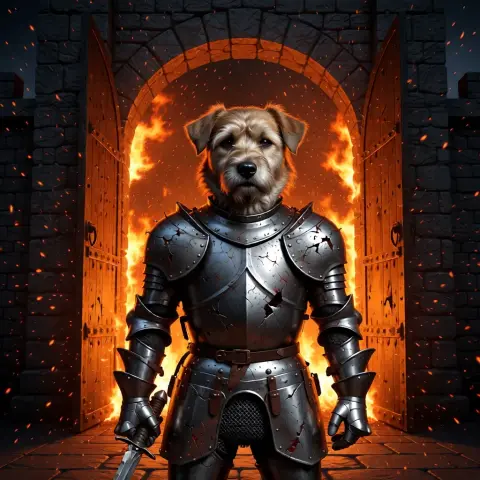 From this photo
Made with one sentence
Real results, each with the exact words that made it.
- Animate a photo“he steps forward as embers drift past, lifts his head and barks once”
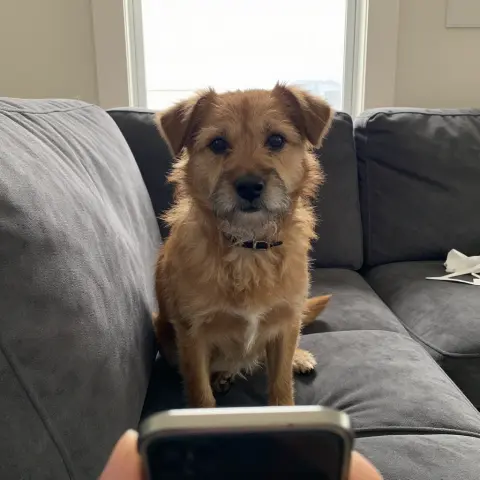 Edit a photo“put this dog in battered knight armour at a burning castle gate; keep his face exactly the same”
- Make a photo talk“You’re still up? Good. Stay with me a while.”
- Restore an old photo“restore and colour it, then: he blinks slowly and smiles”
- Text to video“An old lighthouse keeper climbs the last steps in a storm, opens the door at the top, and a giant wave rises out of the dark sea.”
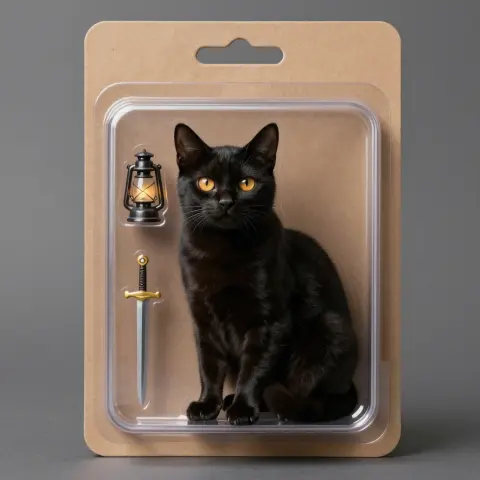 Make an image“a black cat with amber eyes as a collectible action figure in a blister pack, with a tiny lantern and sword”
How it works
- 01Add a photo
- 02Say what happens
- 03It moves, with sound
Add a photo, say in one sentence what happens, and nokeep turns it into a video clip with sound, starting from your picture. There is no account, no email and no app to install, and your photo is not kept on our servers. A five-second clip is 480 credits, about 48 cents.
On this page
How it works
Step 1: Add the photo. It becomes the first frame, so the clip starts exactly from your picture: the same face, the same room, the same light.
Step 2: Say what happens, in one sentence. Describe the motion, not the picture: “she turns toward the camera and laughs”, “the waves start to roll in”, “he lifts his head and barks once”. The picture is already there; the words are for what changes.
Step 3: Open it in nokeep and send. The clip comes back in under a minute in most cases, with its own sound: footsteps, wind, rain, a bark. You can make it again with different words, or make it longer.
What makes a good clip
One subject doing one thing works best. “She smiles and blinks” is more reliable than “she stands up, walks to the window and waves”. If you want a sequence, make it as two clips.
Say how the camera behaves. “The camera stays still” keeps the frame steady; “the camera slowly pushes in” adds drama. Left unsaid, the camera may drift.
Clear, well-lit photos animate best. A face looking roughly toward the camera keeps its likeness better than a profile, and hands are harder than faces.
What it costs
Animating a photo is paid from the first clip. A clip from a photo is 96 credits a second: 480 credits, about 48 cents, for five seconds, and $1.44 for fifteen. 1,000 credits are one dollar.
Credits start at $5, enough for about 10 five-second clips, need no subscription and never expire. The Plus plan at $15 a month covers about 41 five-second clips and unlimited chat. The one free clip a day is made from text only; see the text-to-video tool.
Whose photos you can animate
Your own photos, pictures you made, and images whose licence allows changes. A photo of another person needs their permission, and a photo you found online is not yours to animate.
Some clips are always refused, whatever you pay: anything involving minors, sexual or misleading clips of a real person, and illegal content. Making intimate imagery of a real person without consent is a crime in a growing number of places, and it breaks nokeep’s terms.
What happens to your photo
The photo and the finished clip are saved in your browser, not on nokeep’s servers. To make the clip, the photo and your words are sent to hosted infrastructure that processes them under zero-data-retention terms; nokeep keeps no copy and does not train on them.
Because the clip lives in your browser, clearing site data removes it. Download the ones you want to keep.
Sources
Asked before you asked
Can I animate a photo for free?
Not from a photo. The one free clip a day is made from text. Animating a photo is 480 credits for five seconds, about 48 cents, and credits start at $5.
Does the clip have sound?
Yes. Clips come with their own sound, such as footsteps, wind or rain, and spoken words if you write them into the sentence.
How long can the clip be?
From five to fifteen seconds, in one-second steps. The price is per second and shown before you send.
Do I need an account?
No. There is no sign-up, no email and no app. Pay with a card if you want credits; the credits stay in your browser.
Is my photo kept?
No. It is processed under zero-data-retention terms to make the clip, and both the photo and the clip are saved only in your browser.